
Entrada libre hasta completar aforo.
VI CICLO DE CINE MUDO / 6th Silent Film Series
El pianista frente a la pantalla / The Pianist Opposite the Screen
Con With Pablo Mazuecos
Charles Chaplin · Cine mudo con piano en directo
Charles Chaplin · Silent films with live piano accompaniment
Un año más y por petición popular volvemos a recuperar la figura del más grande de la historia del cine mudo: Charles Chaplin; eso sí, con dos películas no tan conocidas, pero de una calidad insuperable y actual.
Una pantalla, un piano y dos películas de Chaplin. La música interpretada en directo dialoga con los gestos de Charlot, acompaña sus tropiezos y da espacio a su ternura. Cada escena sucede también en la sala: las imágenes y el piano comparten el tiempo con el público.
Esta sesión reúne dos comedias sobre un individuo que intenta desenvolverse entre fuerzas que lo sobrepasan. Vistas desde nuestro presente, nos acercan a cuestiones que siguen abiertas: la guerra, el esfuerzo cotidiano y la capacidad del humor para sostenernos ante la adversidad: «Armas al hombro» (1918, 37 min) y «Charlot domina el piano» (1914, 14 min), de Chaplin.
El humor que permanece
Charlot tropieza, improvisa soluciones y vuelve a intentarlo. Más de un siglo después, reconocemos algo nuestro en esa obstinación. El piano en directo se suma a ella: escucha el movimiento de las imágenes y nos invita a compartir su ritmo, su emoción y su risa.
Duración total de las películas: 51 minutos.
Once again this year, and by popular demand, we are bringing back the greatest figure in the history of silent cinema: Charles Chaplin – albeit with two films that are not so well known but are of unequalled quality and still relevant today.
One screen, one piano and two Chaplin films. The live piano music interacts with Chaplin’s gestures, accompanies his mishaps and enhances his tenderness. Each scene unfolds in the cinema too: the footage and the piano share the moment with the audience.
This screening brings together two comedies about a man trying to navigate forces beyond his control. Viewed from our present-day perspective, they draw us into questions that remain unresolved: war, the daily struggle and the power of humour to sustain us in the face of adversity: Shoulder Arms (1918, 37 mins) and The Piano Player (1914, 14 mins), by Chaplin.
Humour that endures
Charlie stumbles, improvises solutions and tries again. More than a century later, we recognise something of ourselves in that stubbornness. The live piano accompaniment complements it: it listens to the movement of the images and invites us to share in their rhythm, their emotion and their laughter.
Total running time of the films: 51 minutes.
ARMAS AL HOMBRO
Shoulder Arms
37′ (T. P.) / B/N B&W / FICCIÓN FICTION / 1918 / EE. UU. USA
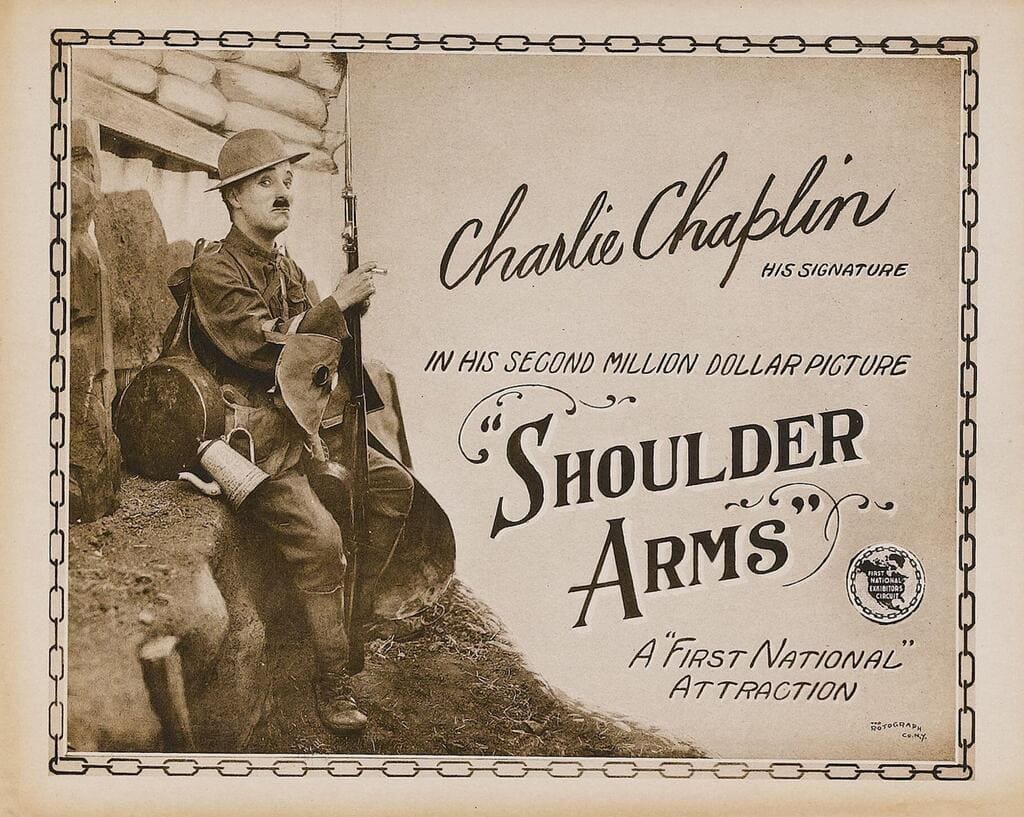
Convertido en soldado, Charlot afronta la disciplina militar y las penurias de las trincheras. El barro, la incomodidad y el peligro se entrelazan con situaciones disparatadas en las que la torpeza y el ingenio se convierten en recursos para sobrevivir.
Estrenada en las últimas semanas de la Primera Guerra Mundial, la película buscó la risa en una experiencia todavía dolorosamente cercana. Hoy, cuando los conflictos nos llegan a través de un flujo continuo de imágenes, podemos encontrar en ella una invitación a detenernos en la persona que hay detrás del uniforme: un cuerpo vulnerable, con miedo, cansancio y deseos de volver a casa.
Now a soldier, Chaplin contends with military discipline and the hardships of the trenches. The mud, discomfort and danger are intertwined with absurd situations in which clumsiness and ingenuity become means of survival.
Released in the final weeks of the First World War, the film sought to bring laughter to an experience that was still painfully close to home. Today, when conflicts reach us through a constant stream of images, there is an invitation within it to pause and consider the person behind the uniform: a vulnerable body, filled with fear and exhaustion, and longing to return home.
Dirección Direction
Charles Chaplin
Intérpretes Cast
Charles Chaplin, Edna Purviance, Sydney Chaplin
CHARLOT DOMINA EL PIANO
His Musical Career
14′ (T. P.) / B/N B&W / FICCIÓN FICTION / 1914 / EE. UU. USA
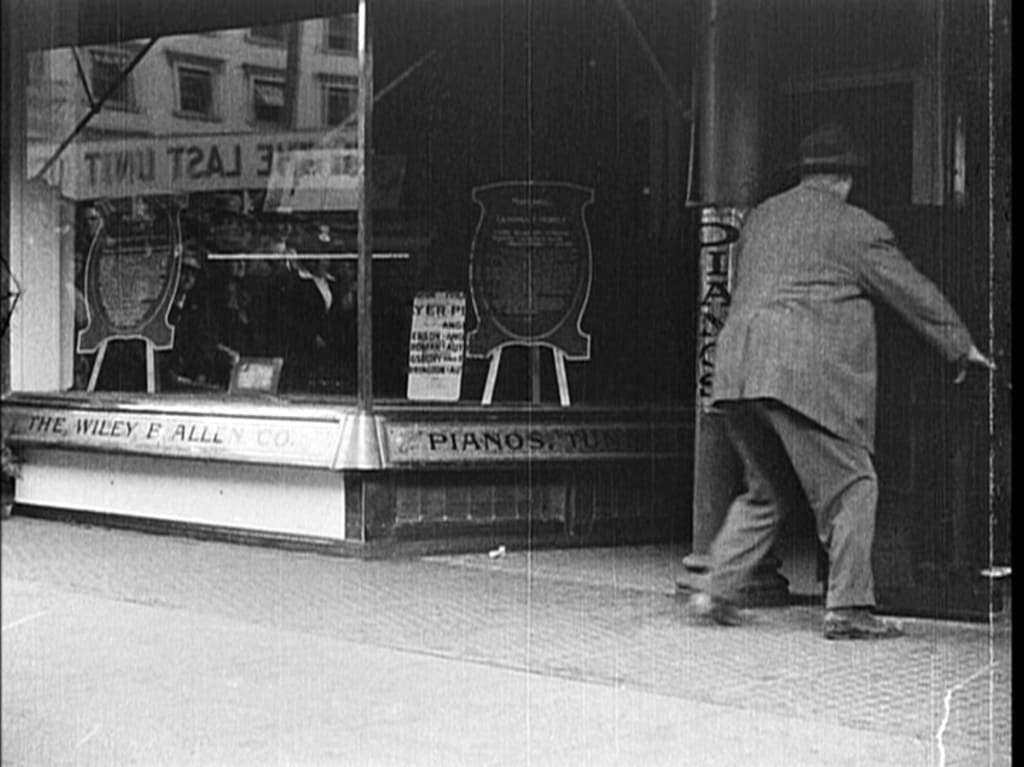
Charlot consigue trabajo como ayudante de un transportista de pianos. Un encargo aparentemente sencillo se transforma en una sucesión de confusiones y esfuerzos desmesurados. El peso del instrumento y la dificultad de moverlo marcan el ritmo de la comedia.
En tiempos de entregas inmediatas y servicios a un clic, sus peripecias nos permiten mirar el trabajo físico que sostiene nuestra comodidad. Detrás de cada objeto que llega a su destino hay cuerpos que cargan, suben escaleras y resuelven imprevistos.
El título del ciclo encuentra aquí un juego especial: mientras Charlot lucha con el piano en la pantalla, el pianista de la sala lo hace sonar. El instrumento participa a ambos lados de la imagen, como objeto de comedia y como compañero del relato.
Charlie gets a job as an assistant to a piano mover. A seemingly simple job turns into a series of mix-ups and Herculean efforts. The weight of the instrument and the difficulty of moving it set the pace of the comedy.
In an age of instant deliveries and one-click services, his misadventures allow us to see the physical labour that underpins our comfort. Behind every object that reaches its destination, there are people carrying it, climbing stairs and dealing with the unexpected.
The title of the series takes on a special meaning here: whilst Charlot struggles with the piano on screen, the pianist in the auditorium plays it. The instrument features on both sides of the screen, as an object of comedy and as a companion to the story.
Dirección Direction
Charles Chaplin
Intérpretes Cast
Charles Chaplin, Mack Swain, Charley Chase
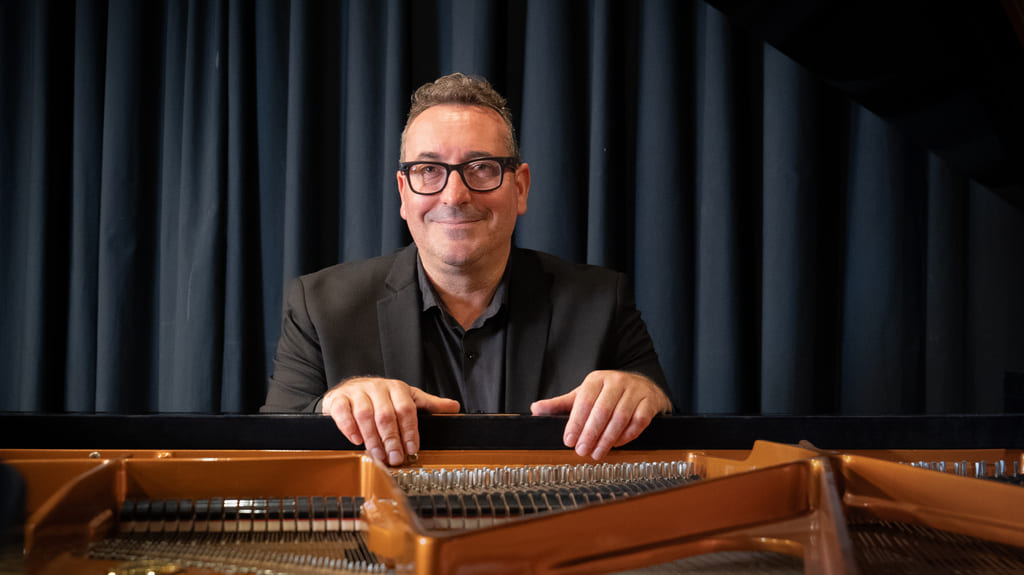
PABLO MAZUECOS
Concertista de piano versátil y con amplia experiencia en estilos tan variados como el jazz, la música de cámara y el lírico. Alterna su faceta artística con una desbordante labor de gestión cultural que se refleja, por ejemplo, en la exquisita programación de Clasijazz. Este club, icono de la música creativa de Almería, ha traspasado ya fronteras gracias a su original modelo que combina una oferta artística de primer nivel con una valiente apuesta formativa de base entre los más jóvenes, y que le hace único en Europa.
Versatile concert pianist with extensive experience in styles as varied as jazz, chamber music and opera. He balances his artistic career with a wealth of cultural management work, which is reflected, amongst other things, in the exquisite programme of events at Clasijazz. This club, an icon of creative music in Almería, has already made a name for itself beyond regional borders thanks to its original model, which combines a first-class artistic programme with a bold commitment to grassroots education amongst the youngest members of the community – a combination that makes it unique in Europe.

 y luego